








Discovering fractions using the months of the year
A sensory way to discover the fractions

Carlotta Cerri
–
Fondatrice de La Tela
10 maggio 2022·2 commenti

Today I want to show you a game I did with Oliver and Emily to find fractions using the months of the year.
If you want to try this game, I have created a PDF for you with fractions to print and cut out and tags of the months, you can download it here (and then print the language you use with your kids). We used the golden beads from our Montessori math material, but you can also use raw pasta or beans.
We started like this: we remembered that Earth revolves around the sun for 1 year and counted how many months there are in a year.
If you want to try this game, I have created a PDF for you with fractions to print and cut out and tags of the months, you can download it here (and then print the language you use with your kids). We used the golden beads from our Montessori math material, but you can also use raw pasta or beans.
We started like this: we remembered that Earth revolves around the sun for 1 year and counted how many months there are in a year.
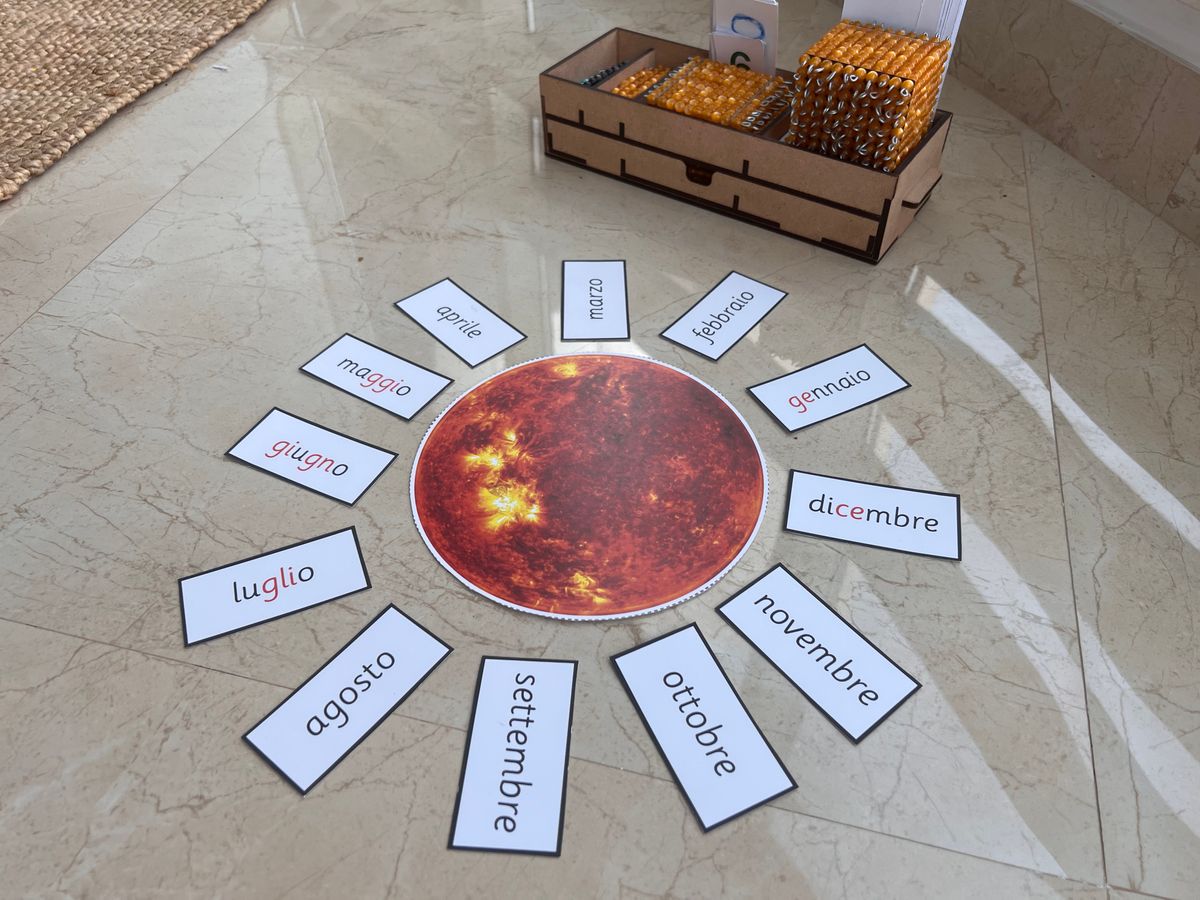
We took the tags of the months and put them in a line, in order.
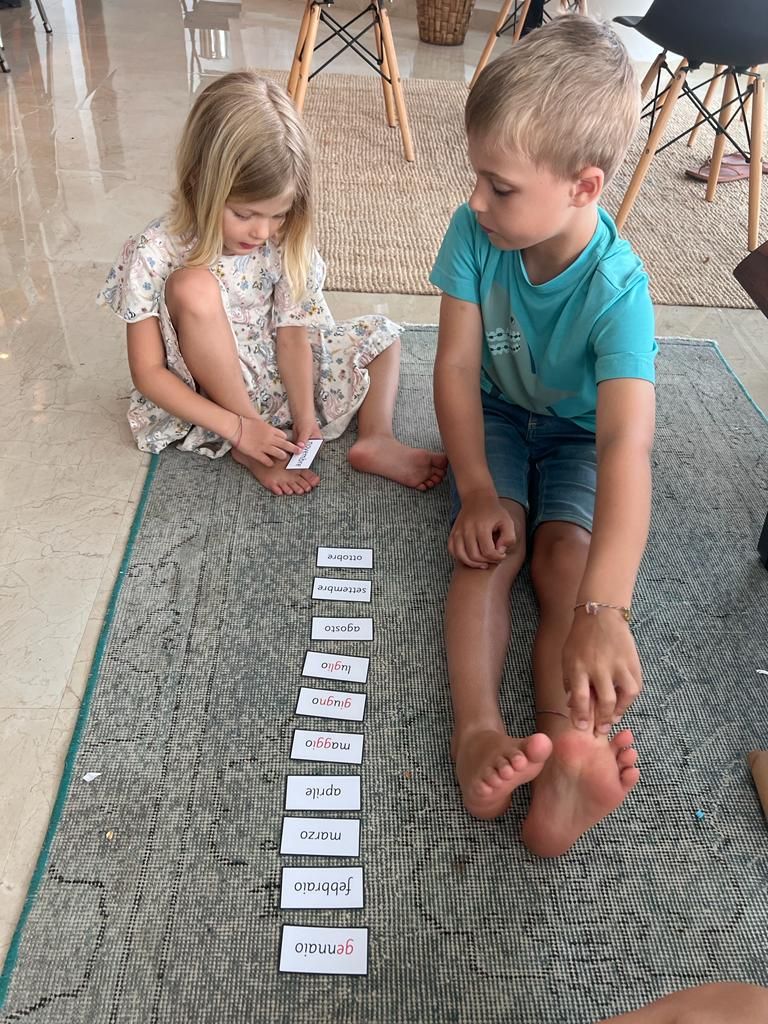
Then we placed a gold bead for each month (you can use raw pasta or beans instead of golden beads), counted the beads and then placed them on the red circle, establishing that 12 months make up a year: this is our whole. In this case the whole is made up of 12 beads.
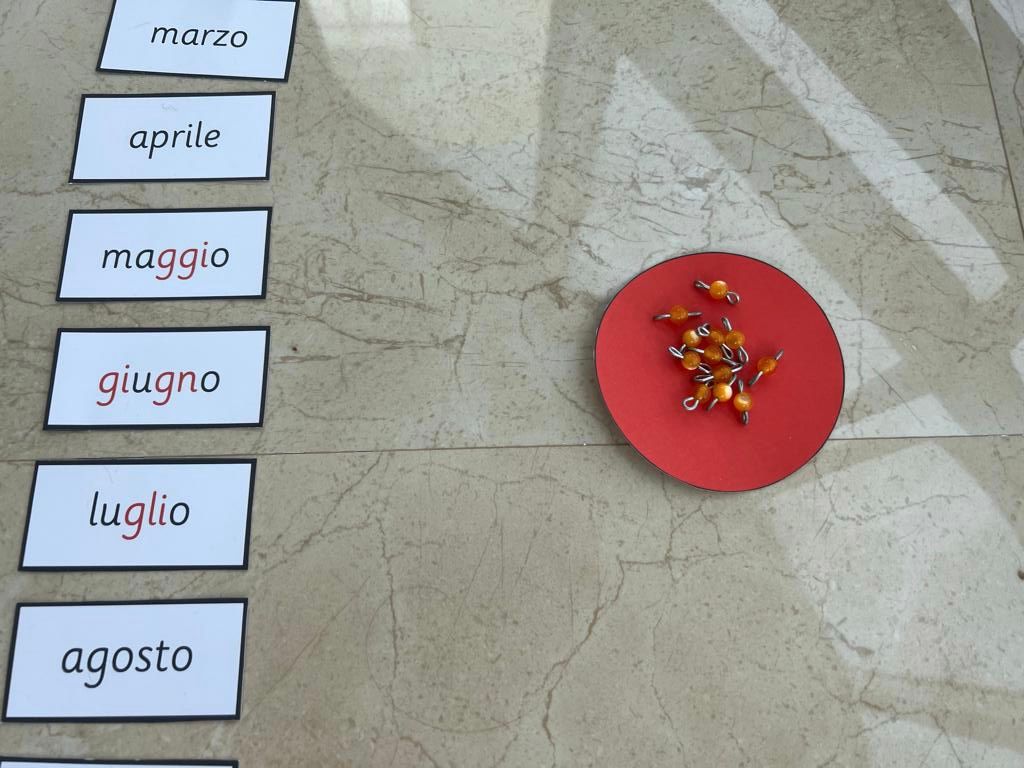
Then I asked the children how we could divide those 12 months into two equal groups. After a couple of tries, this was the result.
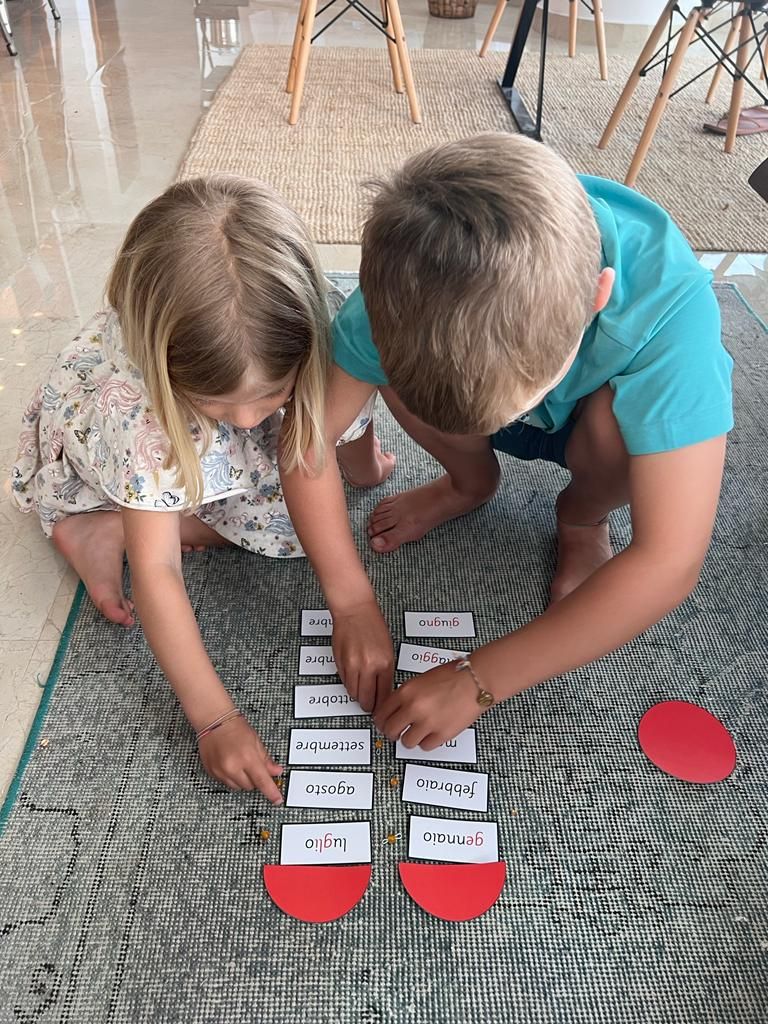
Then we assigned each group a half (red semicircle) and determined that we have 6 months in each half (still using beads, but any small object can be used). Here is our first fraction: ½.
Then we placed a gold bead for each month (you can use raw pasta or beans instead of golden beads), counted the beads and then placed them on the red circle, establishing that 12 months make up a year: this is our whole. In this case the whole is made up of 12 beads.
Then I asked the children how we could divide those 12 months into two equal groups. After a couple of tries, this was the result.
Then we assigned each group a half (red semicircle) and determined that we have 6 months in each half (still using beads, but any small object can be used). Here is our first fraction: ½.
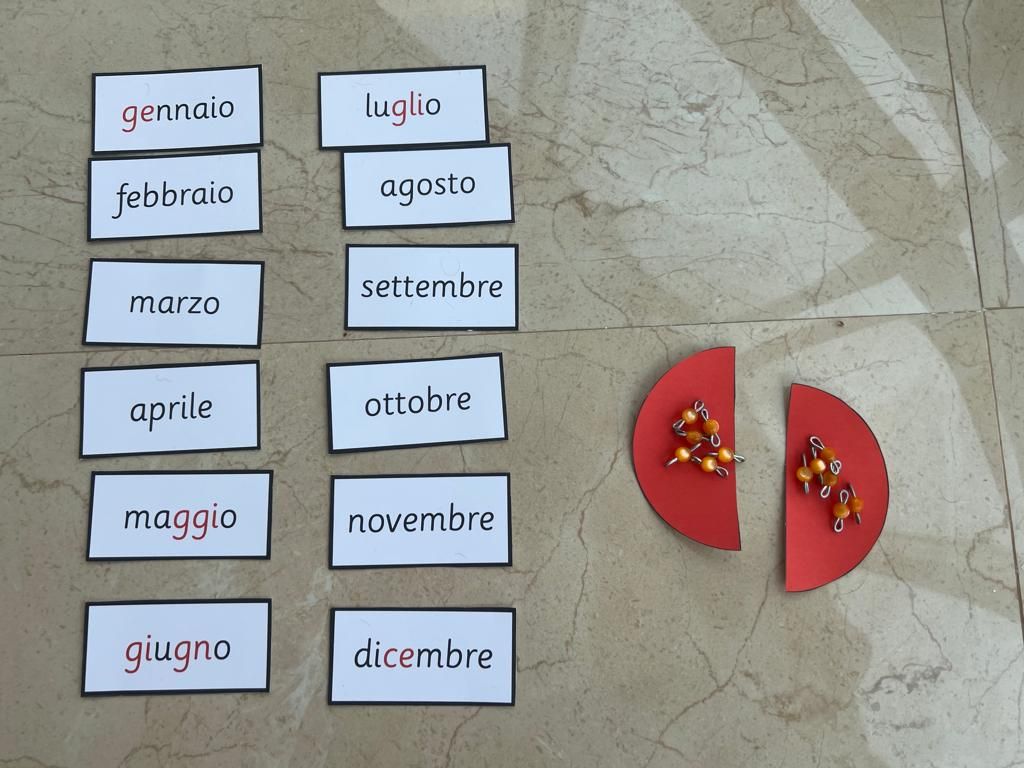
Then I asked the children if they could divide the months into 3 equal groups.
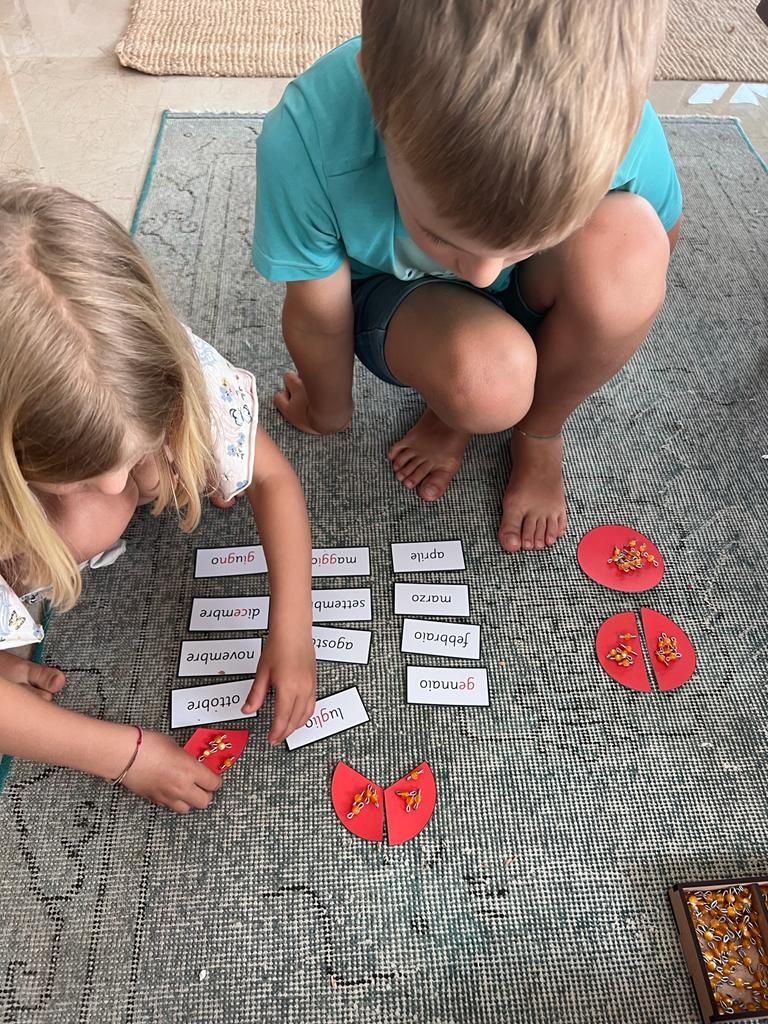
Three parts of the whole: the fraction is ⅓. There are 4 months in each third. I gave up trying to keep the months in order so as not to interrupt the concentration.
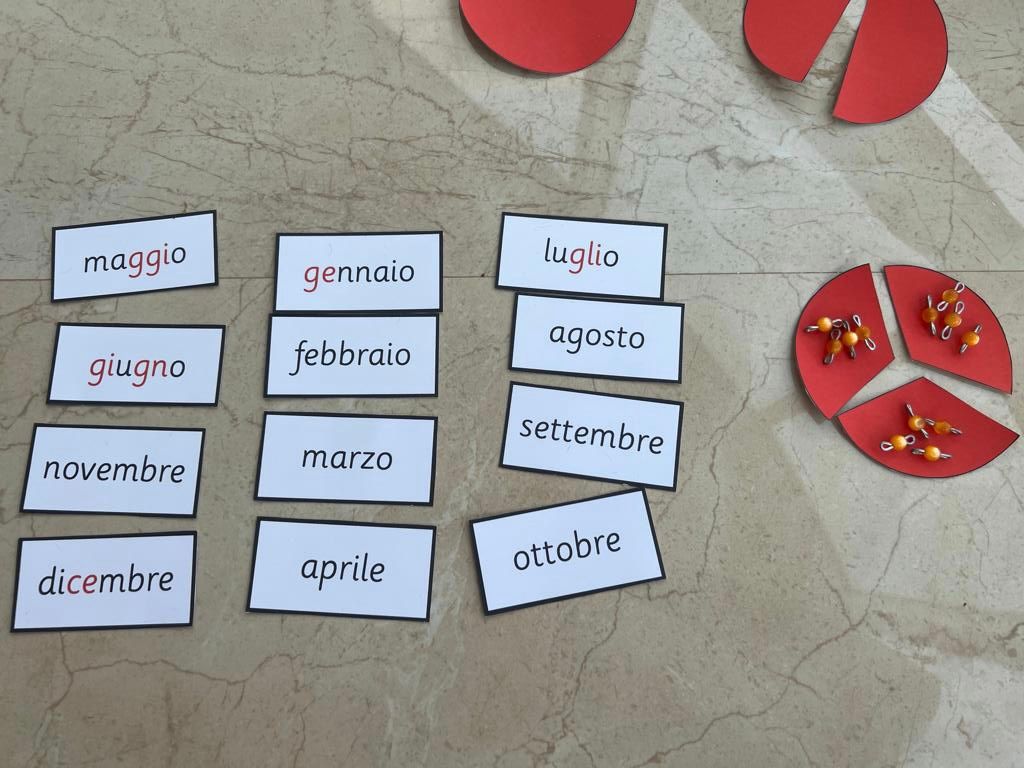
Then I asked them to divide the months into 4 equal groups.
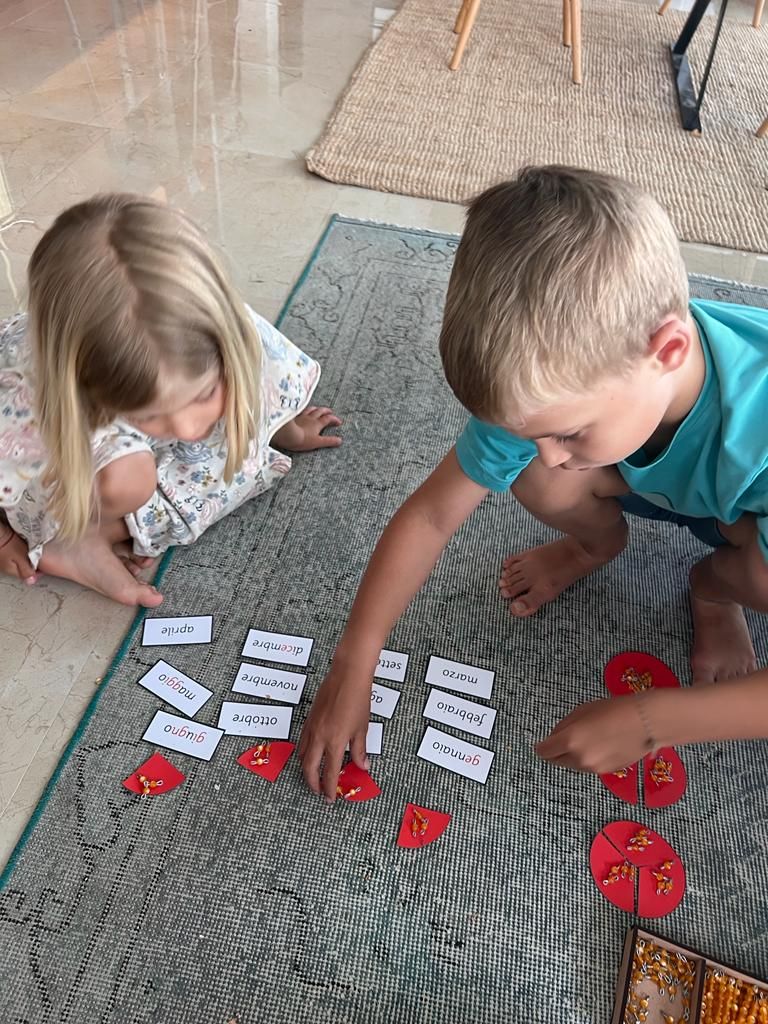
Four parts of the whole: the fraction is ¼. There're 3 months (3 beads) in each quarter.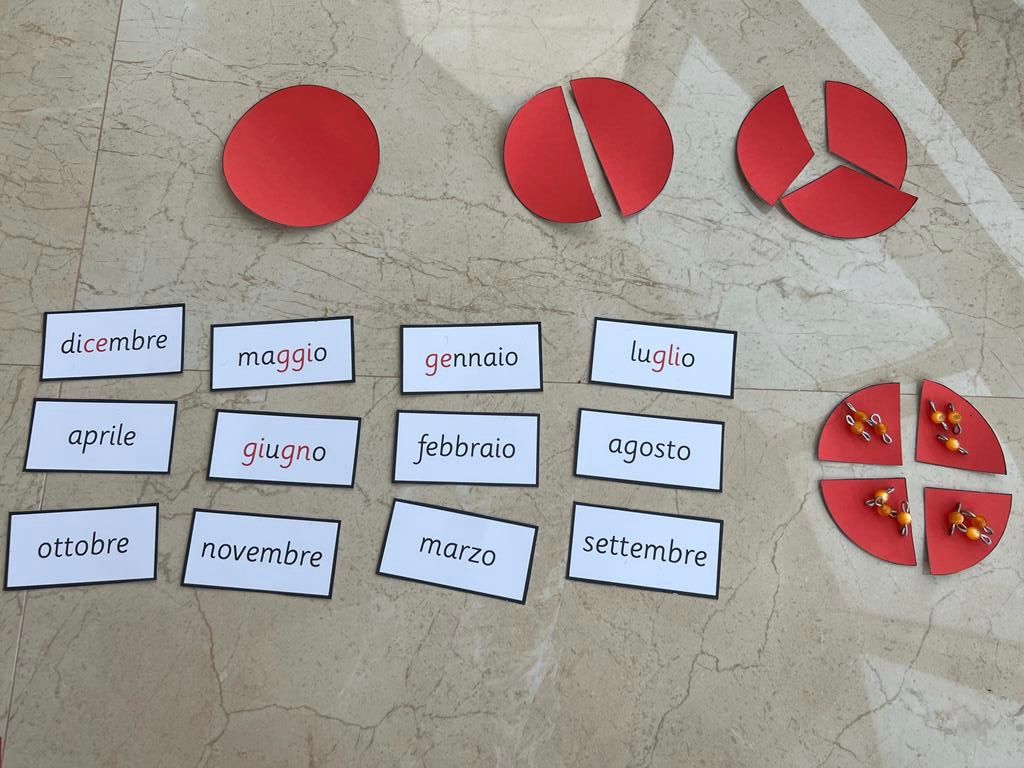
Then I asked them to divide the months into 6 groups. It took a few tries, but here's 1/6. When I give them a problem to solve like this, I usually wait in silence and speak as little as possible.
Then I asked them to divide the months into 6 groups. It took a few tries, but here's 1/6. When I give them a problem to solve like this, I usually wait in silence and speak as little as possible.
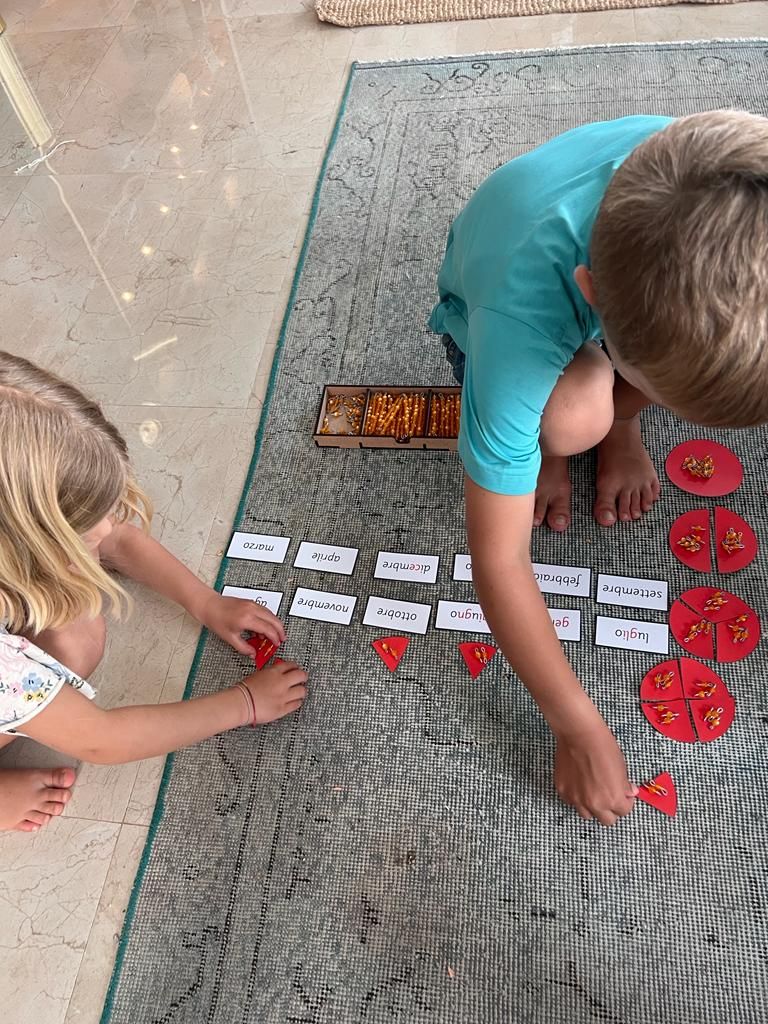
There are 2 months in each sixth and 6 sixths to form a whole.
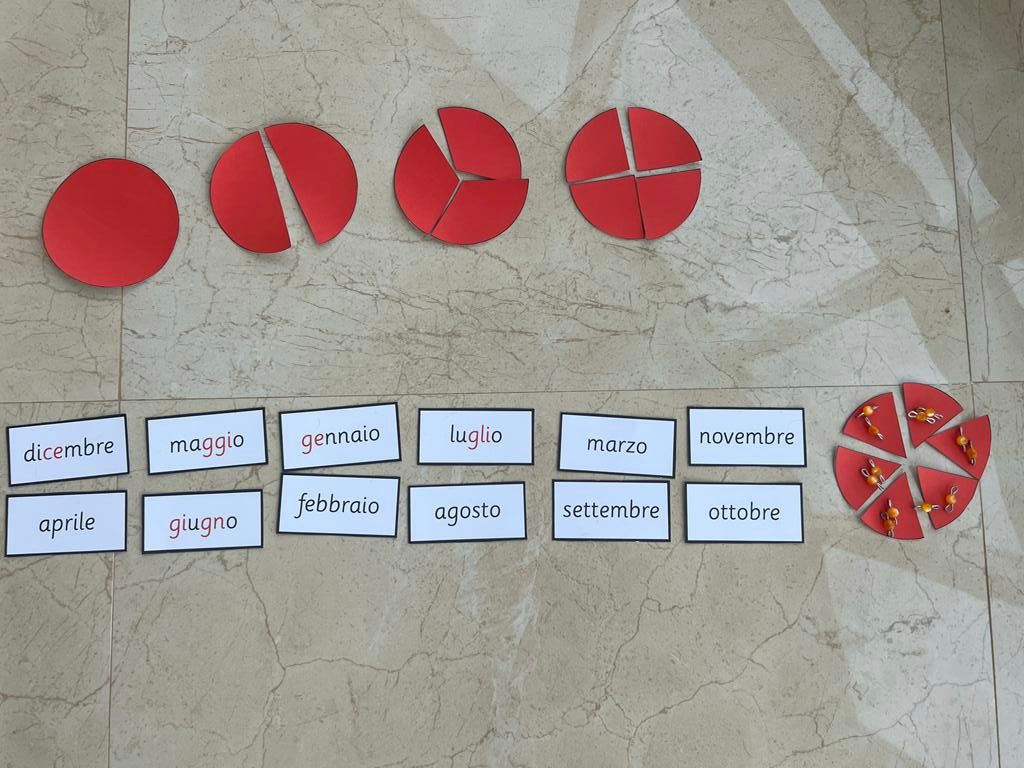
Same thing for 1/12.
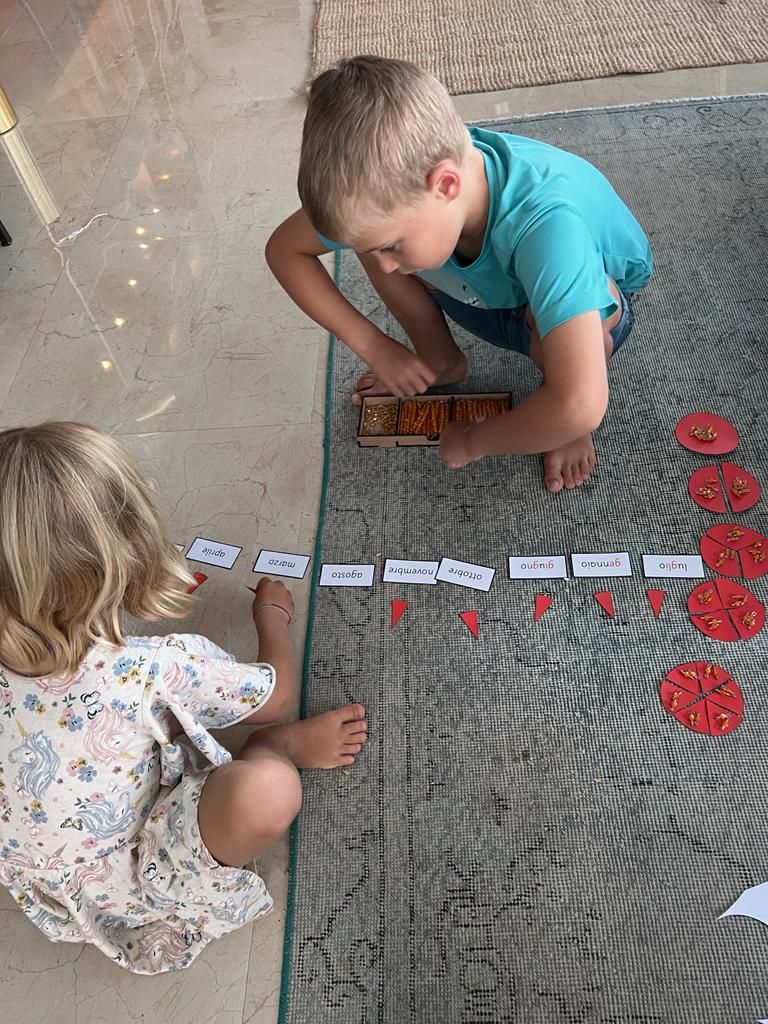
It was fun to discover that to divide them into 12 groups we had to make another line, a bit like at the beginning, although arranged differently.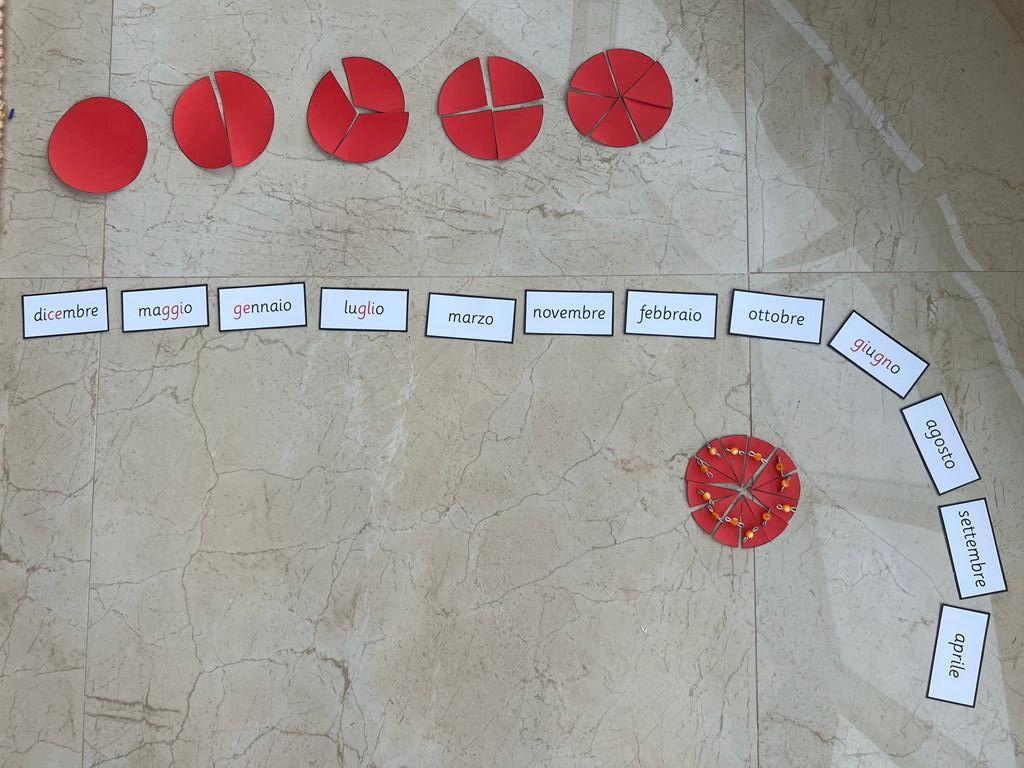
Finally, after repeating the process several times and with all fractions visible on the floor, when I was sure they would give the correct answers, we practiced divisions. "Emily, what is 12 divided by 2?"; "Oliver what is 12 divided by 6?" (obviously the work we'd done was visible and they could refer to it to find the answer).
I don't ask questions if I think my kids won't know the answer. And if they're wrong and neither of them notices, I usually don't correct them, I just make a mental note and work on it on another day. This helps build self-confidence and motivates them to work with this material again. If learning is frustrating you don't learn: children learn best by playing.
Finally, after repeating the process several times and with all fractions visible on the floor, when I was sure they would give the correct answers, we practiced divisions. "Emily, what is 12 divided by 2?"; "Oliver what is 12 divided by 6?" (obviously the work we'd done was visible and they could refer to it to find the answer).
I don't ask questions if I think my kids won't know the answer. And if they're wrong and neither of them notices, I usually don't correct them, I just make a mental note and work on it on another day. This helps build self-confidence and motivates them to work with this material again. If learning is frustrating you don't learn: children learn best by playing.

Emily's creation at the end of the game with the golden beads (you can find them in Le sette mm) 😂 .
Scritto da

Carlotta Cerri
– Fondatrice de La Tela
Sono la fondatrice de La Tela, creatrice del podcast Educare con calma e dal 2019 viaggio a tempo pieno con la mia famiglia Alex, Oliver ed Emily. Mi ritengo una visionaria pessimista: so come voglio cambiare l’educazione e che genitore ho scelto di essere, ma la maggior parte dei giorni mi sembra di scalare pareti di vetro. Ma forse proprio per questo so come aiutarti quando mi scrivi: perché ci passo anche io per quel disagio e ti dico le verità scomode con gentilezza e senza giudizio.


